Index Funds Explained Like You’re Talking to a Friend
An index fund is a type of investment that buys every stock (or bond) in a specific market index, like the S&P 500, so your money grows along with the overall market. You don’t pick individual stocks. You don’t need to time the market. You just buy the fund, hold it, and let compound growth do its thing over years and decades.
That’s genuinely the core of it. But there’s more worth understanding, so let’s break it down.
Key Takeaways:
- Index funds track the whole market. Instead of betting on individual companies, you own a tiny slice of hundreds or thousands of them at once. This diversification is built in.
- They’re cheap and they work. Most actively managed funds fail to beat index funds over the long term, and index funds charge a fraction of the fees.
- Time matters more than timing. The S&P 500 has averaged roughly 10% annual returns since 1957. You don’t need to guess when to buy – you need to stay invested.
What Exactly Is an Index?

Before talking about index funds, it helps to understand what an index is.
A market index is a list of stocks grouped together to represent a section of the market. The S&P 500, for example, tracks 500 of the largest publicly traded companies in the U.S. – names like Apple, Microsoft, Amazon, and JPMorgan Chase. The Dow Jones Industrial Average tracks 30 large companies. The total stock market index covers virtually every publicly traded company in the country.
Nobody actually “buys” an index directly. An index is just a measuring stick. But you can buy a fund that mirrors it – and that’s what an index fund does.
How Do Index Funds Actually Work?
An index fund is managed by a company like Vanguard, Fidelity, or Schwab. The fund buys all the stocks in its target index, in the same proportions. So if Apple makes up 7% of the S&P 500, the fund holds 7% of its assets in Apple stock.
When you invest in an S&P 500 index fund, you effectively own a tiny piece of all 500 companies. If the S&P 500 goes up 10% in a year, your fund goes up roughly 10% (minus a small fee). If it drops 15%, your fund drops about 15% too.
There’s no fund manager making big bets or trying to outsmart the market. The fund simply follows the index. That’s why they’re called “passive” investments – and why the fees are so low.
Why Are Index Funds Better Than Picking Stocks?
Let’s be direct here: for most people, index funds are a better choice than picking individual stocks. There are a few reasons why.
Diversification is automatic. When you buy a single stock, your money rides on that one company’s success. If it tanks, you lose big. With an index fund tracking the S&P 500, one company can go to zero and your overall portfolio barely notices, because the other 499 companies are still doing their thing.
You don’t need to be an expert. Stock picking requires research, analysis, and – let’s be honest – a fair amount of luck. Even professional fund managers, who do this full time with teams of analysts, struggle to beat the market consistently. According to S&P Global’s SPIVA scorecard, about 90% of actively managed large-cap funds underperformed the S&P 500 over a 15-year period. If the pros can’t do it reliably, the odds aren’t great for the rest of us.
Fees are tiny. A typical actively managed mutual fund charges around 0.5% to 1% in annual fees (the expense ratio). An S&P 500 index fund from Vanguard or Fidelity charges 0.03% or less. That difference might sound small, but over 30 years of investing, it can cost you tens of thousands of dollars in lost returns.
What Returns Can You Realistically Expect?
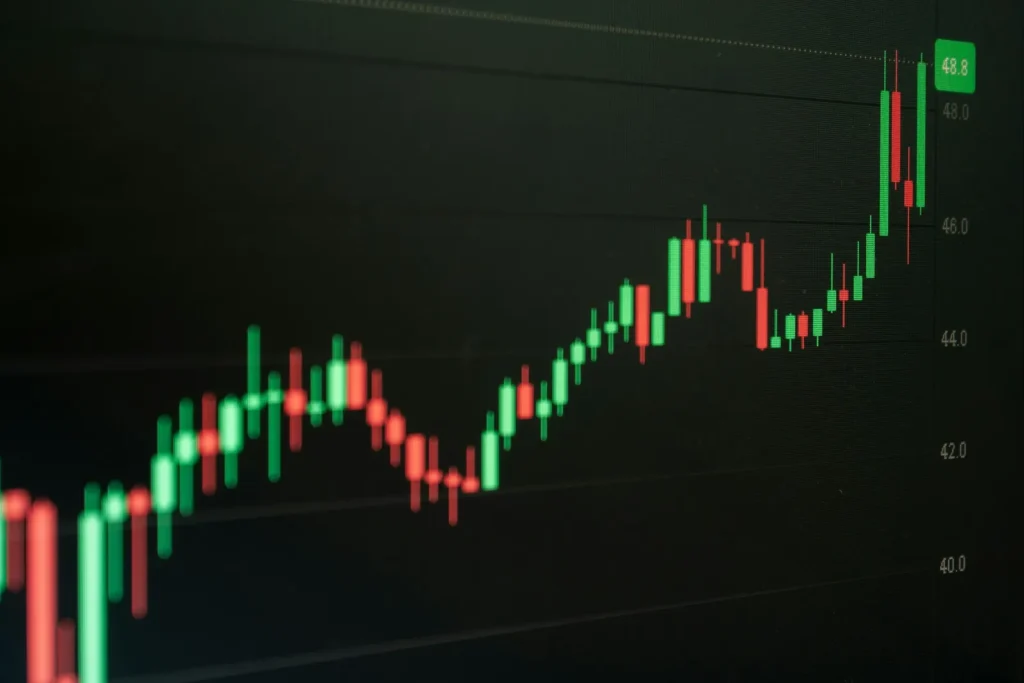
The S&P 500 has returned an average of about 10.4% per year since 1957, according to historical data. After adjusting for inflation, the real return is closer to 6.5%.
Those are long-term averages, though. In any single year, your returns could be anywhere from +30% to -30%. The 2008 financial crisis saw the S&P 500 drop over 36%. The following year, it bounced back nearly 26%. In 2022, it fell about 18%, then roared back with a 26% gain in 2023.
This is why index fund investing works best when you think in decades, not months. Short-term volatility is the price of admission. Long-term growth is the reward.
If you had invested $10,000 into an S&P 500 index fund in 1995 and left it alone, you’d have more than $190,000 today. That’s the power of compounding returns over time.
Index Funds vs. ETFs – What’s the Difference?
You’ll hear both terms thrown around, and the distinction matters less than people think.
An index mutual fund is bought and sold once per day at the closing price. You invest a specific dollar amount (say, $200), and the fund gives you however many shares that buys, including fractional shares.
An index ETF (exchange-traded fund) trades throughout the day on the stock exchange, just like a regular stock. You buy whole shares at whatever the current price is. Some brokerages now offer fractional ETF shares too.
Both can track the same index with similar fees. The main practical differences are:
| Index Mutual Fund | Index ETF | |
|---|---|---|
| How you buy | Dollar amount (e.g., $200) | Share price (e.g., 1 share at $450) |
| When trades happen | End of trading day | Anytime the market is open |
| Minimum investment | Sometimes $1,000–$3,000 | Price of one share (or fractional) |
| Automatic investing | Easy to set up | Depends on brokerage |
| Tax efficiency | Good | Slightly better |
For someone just starting out, either works. If you want to set up automatic monthly contributions (which you should), index mutual funds are slightly easier to automate at most brokerages. If you already have a brokerage account and prefer buying shares manually, ETFs are great.
Which Index Fund Should You Actually Buy?
There’s no single right answer, but here are the most common choices for beginners:
S&P 500 index funds are the most popular. They give you exposure to 500 of the biggest U.S. companies. Top options include the Vanguard S&P 500 ETF (VOO), the Fidelity 500 Index Fund (FXAIX), and the SPDR S&P 500 ETF Trust (SPY).
Total stock market index funds go wider, covering not just large companies but also mid-cap and small-cap stocks. The Vanguard Total Stock Market ETF (VTI) and Fidelity Total Market Index Fund (FSKAX) are popular picks. These give you broader diversification than an S&P 500 fund.
International index funds track stocks outside the U.S. Adding something like the Vanguard Total International Stock ETF (VXUS) gives you global diversification, which can reduce risk if the U.S. market hits a rough patch.
Bond index funds track government or corporate bonds. These are lower-risk and lower-return, but they add stability to a portfolio. The Vanguard Total Bond Market ETF (BND) is one common choice.
A simple portfolio for someone in their 30s might be 80% total U.S. stock market index fund and 20% international index fund. That’s it. Nothing fancy, and it gives you broad, low-cost exposure to the global market.
Common Myths That Hold People Back
“You need a lot of money to start investing”
Not true. Many index funds have no minimum investment. Fidelity’s index funds start at $1. You can buy fractional shares of most ETFs. Even $25 a month builds up over time.
“Index funds are boring”
They are boring – and that’s the point. Boring investments that grow steadily over decades tend to outperform exciting ones that spike and crash. Boring is good when it comes to your retirement savings.
“You’ll lose everything in a crash”
Market crashes are real, and they hurt. But the market has recovered from every single crash in history. If you’re invested for the long term (10+ years), crashes are temporary setbacks, not permanent losses. The biggest risk isn’t a crash – it’s panic-selling during one.
“You need to know when to buy”
This is the timing myth, and it’s responsible for a lot of people never starting at all. Research consistently shows that time in the market beats timing the market. If you invest regularly through automatic contributions – a strategy called dollar-cost averaging – you naturally buy more shares when prices are low and fewer when prices are high.
How to Get Started in 15 Minutes
Getting into index funds is easier than most people think. Here’s the whole process:
- Open a brokerage account if you don’t have one. Fidelity, Vanguard, and Schwab are all solid choices with no account minimums and no trading fees for index funds.
- Choose a fund. An S&P 500 fund or total market fund is a great starting point.
- Set up automatic contributions. Even $50 or $100 a month is a meaningful start. The habit matters more than the amount.
- Leave it alone. Don’t check it daily. Don’t panic when the market dips. Just let it compound.
If you already have an emergency fund in place, investing in index funds is the logical next step. For a full walkthrough of that transition, check out this guide on investing for beginners after building an emergency fund.
What About Retirement Accounts?
If your employer offers a 401(k), check whether they have index fund options – most do. Invest at least enough to get any employer match (that’s free money). Beyond that, a Roth IRA is an excellent place to hold index funds because your gains grow tax-free.
In 2025, you can contribute up to $23,500 to a 401(k) and $7,000 to a Roth IRA (with an additional $1,000 catch-up contribution if you’re 50 or older). Maxing out both isn’t realistic for everyone, but even contributing consistently to one of them puts you in a strong position over time.
The Devil’s Advocate Case
Some people argue that indexing is too passive – that you’re settling for average returns when you could do better by picking the right stocks or sectors. And in any given year, that’s true. Some investors do beat the market.
But here’s the thing: they rarely do it consistently. The data overwhelmingly shows that most active investors – including professionals – underperform index funds over a 10- to 15-year period once fees are factored in. Could you be the exception? Maybe. But the cost of being wrong is high, and the cost of indexing is basically zero.
For most people, the best investment plan is the boring one you actually stick with.
Where Do You Go From Here?
Index fund investing isn’t complicated, and that’s exactly why it works. You don’t need a finance degree, a financial advisor, or a hot stock tip. You need a brokerage account, an automatic transfer, and the patience to let time do its thing.
Start small if you need to. Even $50 a month invested in an index fund today is worth far more than $500 a month you keep telling yourself you’ll invest “someday.”
FAQ
Are index funds safe?
No investment is completely safe. Index funds can lose value during market downturns. But because they’re diversified across hundreds or thousands of companies, they’re far less risky than individual stocks. Over any 20-year period in history, the S&P 500 has always delivered positive returns.
How much should you invest in index funds each month?
As much as you can afford after covering your essential expenses and emergency fund contributions. Even $50–$100 a month makes a meaningful difference over decades. The most important factor is consistency – investing regularly, regardless of what the market is doing.
Do index funds pay dividends?
Yes. Many of the companies inside index funds pay dividends, and those dividends get passed through to you. You can choose to reinvest them automatically (which compounds your returns) or take them as cash. Reinvesting is almost always the better choice while you’re still building wealth.
Can you lose all your money in an index fund?
Losing everything would require every company in the index to go to zero simultaneously, which has never happened. During the worst crashes, the S&P 500 has dropped 30–50%, but it has always recovered. The real risk is selling during a downturn and locking in your losses.
What’s the difference between an index fund and a target-date fund?
A target-date fund automatically adjusts its mix of stocks and bonds as you get closer to retirement. It usually holds index funds inside it. Target-date funds are a good “set it and forget it” option, but they typically have slightly higher fees than buying index funds directly.